
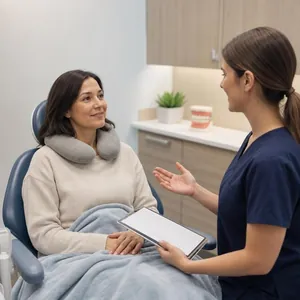
If you are considering dental implants but keep getting stuck on one question, "How much will it hurt?", you are not alone. Pain and anxiety are two of the biggest barriers we hear from patients who are comparing options with an Implant Dentist Los Gatos search.
The good news is that most people do not describe implant treatment as "painful" so much as "sore afterward." What you feel depends on your anatomy, the number of implants, and your specific treatment plan, but there are reliable patterns you can use to plan ahead.
Implant placement is typically done with local anesthesia, so the goal is comfort during the appointment. Afterward, it is normal to have a few days of swelling and tenderness that gradually improves.
If you are exploring dental implants in Los Gatos, this guide focuses specifically on what patients typically feel, how numbing works, and when to call in.
In our previous blog, "Top 6 Aftercare Tips From an Implant Dentist in Los Gatos," we discussed practical healing habits. In this article, we focus on the pain and sensation questions that come up before and right after implant treatment.
The most important comfort tool is local anesthesia (numbing medicine). Its purpose is to block pain signals from the area being treated. You may still feel pressure or movement, but you should not feel sharp pain.
A practical rule: pressure is common; sharp pain is not. If something feels painful, tell your dentist right away so they can pause, evaluate, and adjust numbing. Our team finds that when patients share what they are feeling in real time, comfort can usually be improved quickly.
After the numbness wears off, soreness is expected. Think of it like a bruised, tender feeling at the surgical site rather than the throbbing toothache pain many people associate with infected teeth.
Every case is different, but many patients experience a predictable pattern: discomfort is most noticeable early and then improves.
If you want a broader overview beyond comfort, our implant dentistry page includes a section on surgery and recovery that can help you understand the overall healing phase.
Competitor implant pages often mention comfort options for anxious patients because it is a real concern. The right plan depends on your health history, anxiety level, and what procedure is being performed.
If you are looking for a team that can coordinate your care long-term, you can also learn about our broader approach as a family dentist in Los Gatos.
Mild to moderate soreness that improves is expected. What we do not want is pain that escalates or comes with signs of infection or complication. Contact the office if you notice any of the following:
Follow-ups are not only about checking the implant site. They are also where patients get reassurance that what they are feeling is within a normal range, and where small issues can be corrected early.
If you are new to our office and want to get a sense of the setting before scheduling, you can take a look at our office tour.
During implant placement, local anesthesia is used to numb the area so you should not feel sharp pain. Many patients describe sensations like pressure or vibration rather than pain. If you feel discomfort during treatment, tell your dentist so they can adjust numbing and keep you comfortable.
It is common to have mild to moderate soreness for a few days after implant surgery, along with swelling or tenderness near the site. Discomfort often peaks in the first 48 to 72 hours and gradually improves. Your dentist will provide instructions on pain control, eating, and oral hygiene during healing.
Some swelling of the gums and cheek near the implant is typical. Swelling is usually most noticeable in the first couple of days and then starts to go down. Cold packs early on and following post-op instructions can help.
Call your dentist if pain is worsening instead of improving after a few days, if you notice persistent bleeding, fever, increasing swelling after day three, bad taste or drainage, or if your bite suddenly feels different. These can be signs you need an evaluation.
Experiences vary by person and case, but many patients report implant placement discomfort is comparable to, or sometimes easier than, an extraction afterward. The key difference is that implant soreness is often described as localized tenderness and swelling rather than sharp tooth pain.
For most patients, dental implant treatment is more manageable than they expect: numb during the appointment, then a short period of soreness and swelling afterward. If you are comparing dentists in Los Gatos and pain is your biggest concern, the best next step is a conversation about your specific health history, anxiety level, and comfort plan.
To speak with Dr. Kamyar Negari about implant options and what you can realistically expect for comfort and recovery, contact Esthetic & Family Dentistry. Call 408-377-8302.


Accessibility Menu
